What an Anode Rod Does Inside Your Tank
Every glass-lined steel tank water heater ships with at least one anode rod — a long metal core, usually magnesium or an aluminum-zinc alloy, threaded into the top of the tank and hanging down into the water. Steel wants to rust the moment it meets water and oxygen, and no glass lining is perfect: microscopic cracks and pinholes always exist. The rod is the more reactive metal, so corrosive electrochemical reactions attack it first, sparing the steel around it.
Think of the rod as a decoy the tank sacrifices on purpose. As months pass, the rod slowly dissolves and pits while the tank walls stay intact. This protection only lasts while rod material remains. Once the core wire is exposed or the rod has thinned to a fraction of its original diameter, corrosion turns its attention back to the tank — and that is when leaks begin. For background on how tank leaks develop, see our tank water heater leak repair page.
Signs Your Anode Rod Is Worn Out
The most famous symptom is a rotten-egg or sulfur smell in hot water only — cold water smells fine. That odor comes from sulfate-reducing bacteria reacting with a depleted magnesium rod, and it is a classic flag that the rod is spent. Rusty or reddish hot water (again, hot only) is another: with the rod gone, the tank's own steel starts rusting into the water.
Age is the quietest clue. In average water, a standard rod lasts roughly three to five years; many Colton tanks we open have never had the rod touched in a decade or more. Rumbling or popping from sediment, a tank approaching its second decade, or a rod inspection that shows bare core wire all point the same direction: replacement is overdue.
How Anode Rod Replacement Works, Step by Step
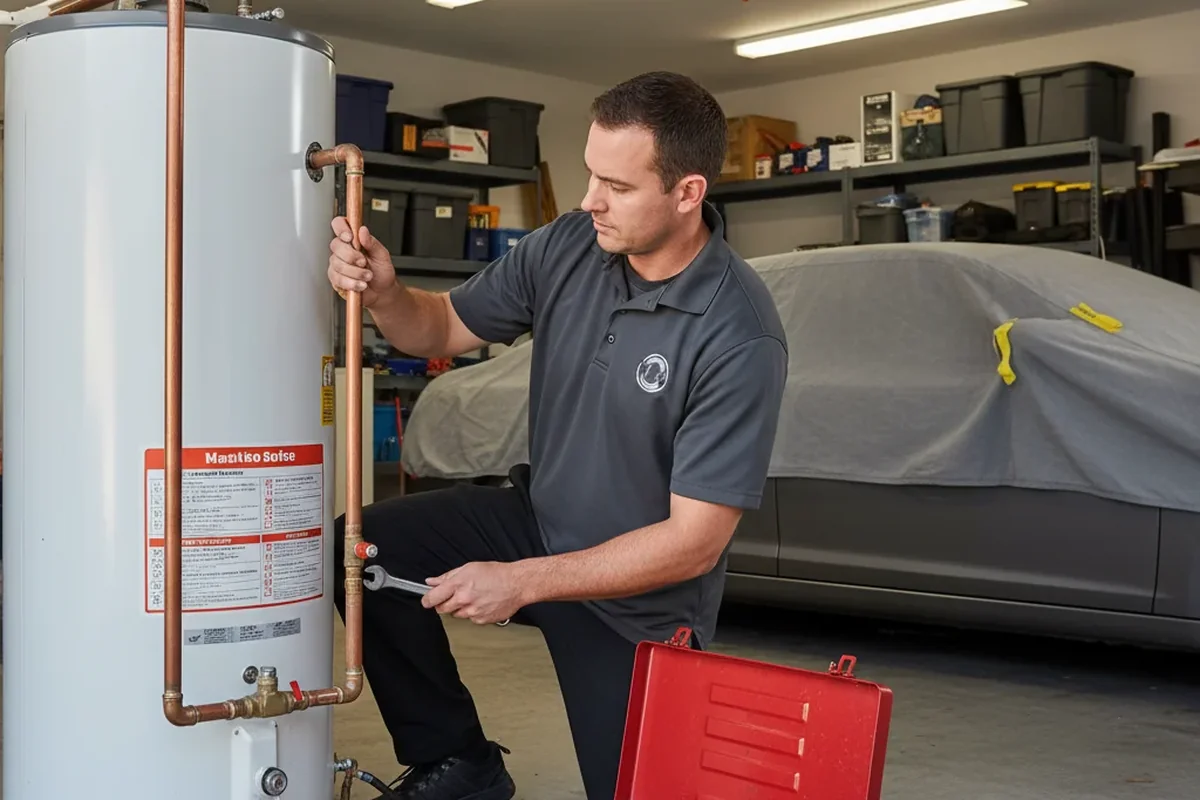
The technician starts by shutting off the cold-water supply and the energy source — the gas control turned down for gas units, the breaker for electric — then lets the tank cool so nobody works with scalding water. A hot-water tap is opened to relieve pressure, and the drain valve is cracked just enough to drop the water level a few inches below the rod port, so water does not gush when the rod comes out.
The hex head on top of the tank is broken loose — sometimes with a breaker bar, since years of heat cycling seize the threads — and the old rod is lifted straight out for inspection. Its condition tells the story of the tank: heavy pitting means it did its job. The new rod, wrapped with thread sealant tape, threads into the same port and is tightened snugly, the tank is refilled, air is bled from the hot taps, and the unit is relit or re-energized and checked for drips at the port.
Rod Materials: Magnesium, Aluminum-Zinc, and Powered Rods
Magnesium rods protect the most aggressively and are the default in many tanks, but they can feed the sulfur-smell bacteria in some water chemistries. Aluminum-zinc rods are the common answer when odor is the complaint — slightly less protective, much less smell. Powered (impressed-current) rods use a small electrical current instead of dissolving metal; they never need replacing and are an option when a tank eats standard rods unusually fast.
Length and clearance matter as much as material. Standard rods run about three to four feet long, and low garage ceilings or tight closets can make them impossible to swing into place — in those cases segmented or flexible rods link together inside the tank. Matching the rod to the tank's specification and the home's water chemistry is part of the service, not an afterthought.
Safety Notes for This Job
A water heater is a pressurized vessel full of very hot water, and even a straightforward rod swap deserves respect. The tank must be cool and depressurized before the port is opened; opening a hot, pressurized tank can release a scalding surge. On gas units, the gas control is set so the burner cannot fire while the tank is partially drained, and the pilot is relit carefully afterward with the area ventilated.
Seized rods are the main hazard: forcing a stuck hex head can twist the tank's internal fittings or crack the port. Penetrating oil, the right leverage, and patience beat brute force — and if a rod truly will not budge, that itself is diagnostic information about the tank's condition. Electrical safety applies on electric units: breaker off and verified before touching anything.
Why Colton's Water Wears Rods Faster
Colton sits in the Inland Empire on mineral-heavy groundwater, and harder water is more electrically conductive — which means the galvanic reaction that consumes the anode rod runs faster here than in soft-water regions. A rod rated for five years in mild water can be spent in three in a Colton garage. Checking the rod on a shorter cycle is not upselling here; it is matching maintenance to the water.
Housing stock compounds it. Much of central and south Colton dates to the 1950s through the 1970s, and many of those homes run tanks well into their second decade — tanks whose original rods dissolved years ago. If your heater is old enough to vote and the rod has never been changed, the tank has been defending itself alone for a long time. You can reach Water Heater Leak Repair Pros at (833) 713-2101, and browse the areas we serve around the Inland Empire.