When Replacement Beats Repair
Every water heater reaches a point where repair stops making sense, and recognizing it saves money. The definitive sign is shell failure — water weeping through the steel tank wall or seams. A breached pressure vessel cannot be patched; replacement is the only safe fix. Persistent rusty hot water that flushing does not clear means internal corrosion has won, even before an actual leak appears.
Age frames the decision: tanks past twelve to fifteen years are living on borrowed time regardless of symptoms, and a major component failure on a unit that old is usually the beginning of a cascade rather than an isolated event. The economics test is simple — when a repair costs a substantial fraction of replacement on a tank with little life left, replacement is the better investment. A technician's honest assessment of the shell's condition should anchor the call.
Sizing and Choosing: Tank vs. Tankless, Gas vs. Electric
Proper sizing starts with how your household actually uses hot water: number of occupants, bathrooms, and the peak moments — morning showers overlapping with laundry, for instance. For tank models, that translates to gallons of first-hour delivery; for tankless, to the flow rate the unit must sustain at your coldest incoming-water temperature.
Fuel type is the next fork. Gas heats faster and usually costs less to run; electric installs more simply where gas is unavailable. Tankless suits households that value endless hot water and have space constraints, while tanks suit those wanting simplicity and lower upfront cost. In Colton, water chemistry belongs in the decision: hard water demands committed descaling for tankless longevity, a maintenance reality some households prefer to avoid by staying with a tank.
Installation Day: What Actually Happens
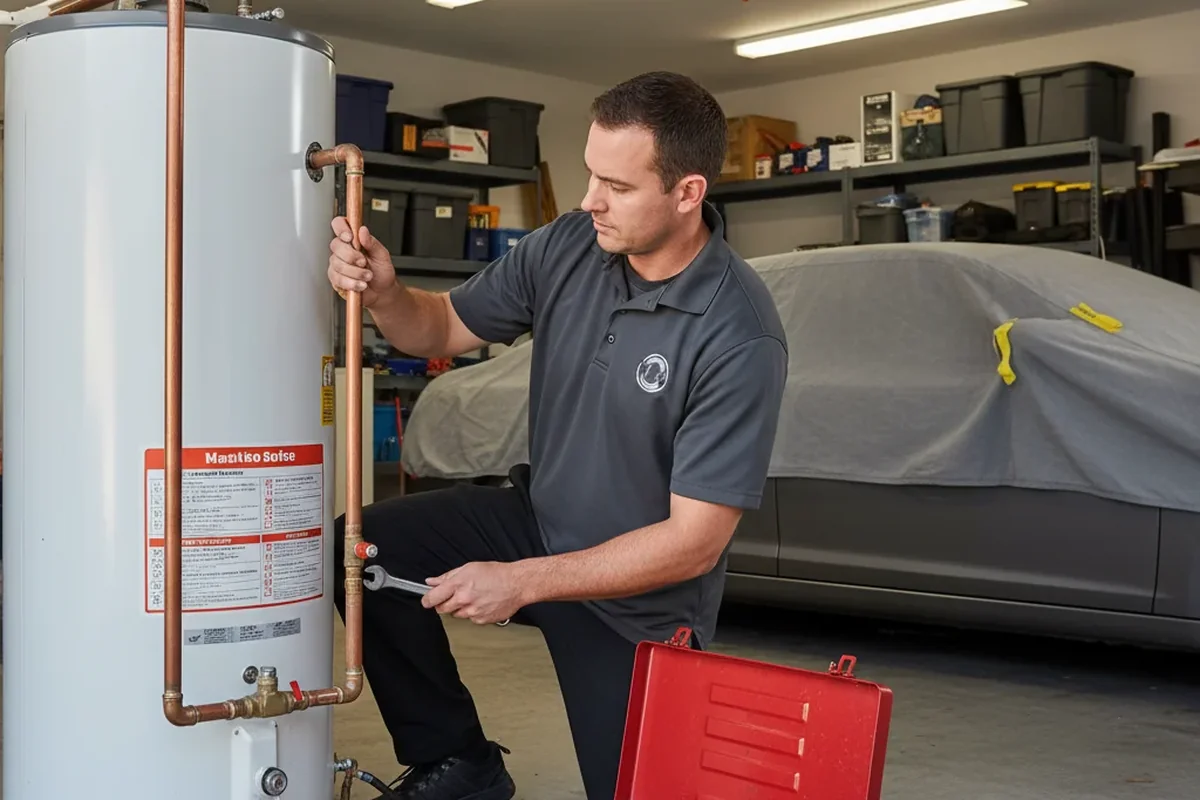
Installation day follows a practiced sequence. The old unit is shut down, drained, disconnected, and hauled away. The new heater is set level in position — ideally into a drain pan — and connected: water lines with new supply connectors and shutoff valve, gas line with proper sizing and leak testing or the dedicated electrical circuit verified, and venting corrected to current standards on gas units.
Then comes the critical phase most homeowners never see: the tank is filled completely and air is bled before any energy is applied, seismic straps are anchored to structural framing, the expansion tank is installed or verified on closed systems, and the unit fires for the first time. The technician runs it through a full heat cycle — checking for leaks at every joint, verifying combustion and venting on gas, confirming tap temperatures — before considering the job complete.
Upgrades Worth Doing While We're There
Replacement is also the moment to correct everything the old install got wrong. A drain pan goes under the new unit — see our water heater pan installation page for why this matters. An expansion tank is added if the plumbing system is closed and lacks one. The shutoff valve gets replaced if the old one is seized. Dielectric unions prevent galvanic corrosion at copper-to-steel connections.
Venting deserves special attention on gas replacements: older Colton installs often have venting that met the standards of its decade but not today's, and Santa Ana wind downdrafts punish marginal vents. Bringing the vent up to current standard during replacement prevents the pilot and drafting problems that plague older setups. These upgrades cost little during an install and prevent years of callbacks.
Safety and Code Compliance on Every Install
Gas replacement work follows strict safety protocol: supply off and verified before any line is broken, gas-rated sealants only, and leak testing of every disturbed joint under pressure. Combustion is verified after firing — proper flame characteristics and confirmed vent draw, so exhaust exits through the flue instead of spilling into the room.
Electric replacements get equal rigor on the electrical side: dedicated circuit, correct breaker and wire gauge for the unit's draw, connections torqued and inspected for heat damage. On any fuel type, the TPR valve and its discharge piping are installed to standard — never reused from the old unit on hope — and safety controls are tested, not assumed. The permit and inspection process exists to verify exactly these details.
Replacing a Heater for Colton's Water and Housing
Colton's conditions shape replacement choices in specific ways. Hard water argues for either a tank with a diligent anode-rod and flushing schedule, or a tankless paired with a real commitment to annual descaling — there is no maintenance-free option in the Inland Empire, only different maintenance. Homes on high-pressure municipal zones need regulation and expansion control built into the new install, not discovered afterward.
The housing stock matters too: mid-century homes often need venting, strapping, and pan upgrades to meet current standards, which a like-for-like swap quote should include honestly. And with summer garage temperatures topping 100 degrees, the install location's heat exposure gets factored into equipment choice. Start at visit our homepage for everything we do, browse the areas we serve, compare with tankless water heater leak repair if you are weighing repair, or call (833) 713-2101 to discuss your replacement.