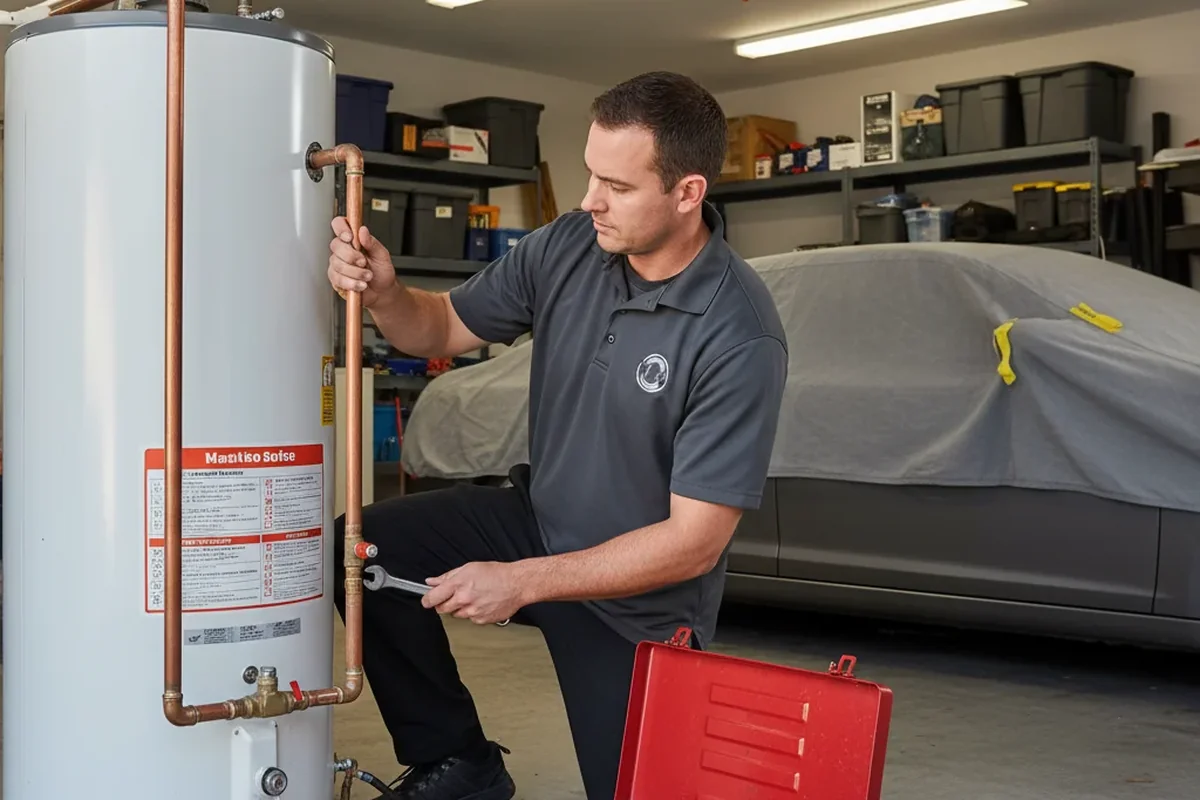
What the Gas Control Valve Does
On a gas water heater, the gas control valve is the brass-bodied component at the lower front of the tank where the gas line enters. It does three jobs at once: it meters gas to the main burner in response to the thermostat's call for heat, it manages the pilot flame through the thermocouple safety circuit, and it shuts everything down if the pilot goes out. Every firing cycle of your heater runs through this one component.
Because it is electromechanical, it wears. Internal diaphragms stiffen, thermostat calibration drifts, safety magnets weaken, and sediment or corrosion fouls the small internal passages. When it fails, the symptoms range from annoying — a pilot that will not stay lit — to serious, like a burner that will not shut off or gas odors around the valve body.
Signs Your Gas Valve Is Failing
The classic symptom is a pilot that lights but will not stay lit when you release the knob — though as often as not, that turns out to be the thermocouple rather than the valve itself. A burner that never fires despite a healthy pilot, a burner that fires but will not modulate, or water temperatures that swing wildly all point toward the valve's internal controls.
More urgent signs include any smell of gas around the valve body, a burner that stays lit when the water is already hot, or visible corrosion and soot staining on the valve. Gas odors are never a wait-and-see situation: leave the area and call for help rather than troubleshooting it yourself.
Diagnosis First, Then Step-by-Step Replacement
Diagnosis comes before parts. The technician verifies gas supply pressure with a manometer, tests the thermocouple's millivolt output, and checks whether the valve's internal safety magnet holds — isolating whether the fault is the valve, the thermocouple, the pilot assembly, or simply supply pressure. Replacing the valve without this testing is how good money follows bad.
Replacement itself starts with shutting off the gas at the supply valve and confirming zero pressure downstream. The gas line, pilot tube, and thermocouple connections are disconnected, the old valve is unthreaded from the tank, and the new valve — matched to the unit's BTU rating and model — is installed with approved thread sealant. Every disturbed joint is then leak-tested with detection solution, the pilot is lit and adjusted, and the burner is run through a full heat cycle while temperatures are verified.
Parts Commonly Serviced With the Valve
Several related parts are typically serviced alongside the valve. The thermocouple is the most common companion replacement — it is inexpensive, it wears on a similar timeline, and a fresh valve with a tired thermocouple is asking for a callback. The pilot assembly itself, including the pilot orifice and tubing, is cleaned or replaced if it shows corrosion or weak flame.
The gas supply connector and shutoff valve are inspected too; a corroded connector or a seized supply valve is replaced while the gas is already off. On the venting side, the draft hood and flue are checked for proper draw, since venting problems can mimic valve symptoms by disturbing the pilot flame.
Safety Rules for Gas Valve Work
Gas work has no margin for casual mistakes. The gas supply stays off and verified off before any fitting is broken, and the work area is ventilated throughout. Only thread sealants rated for gas are used — standard plumbing tape or dope on a gas joint is a leak waiting to happen. After assembly, every joint is tested under pressure with leak-detection solution or an electronic detector, not just eyeballed.
Combustion safety matters as much as leak safety. The burner flame is checked for proper color and pattern — lazy yellow flames signal combustion problems — and the venting is confirmed to draw correctly so carbon monoxide exits through the flue. The technician should also confirm any gas odor you reported is fully resolved before considering the job done.
Santa Ana Winds, Old Gas Trains, and Colton Heaters
Colton's Santa Ana wind events add a wrinkle most cities never think about. Strong, gusty offshore winds can create downdrafts in water heater flues, especially on older garage installations with short or poorly capped vents. A downdraft snuffs pilot flames and can make a healthy gas valve look faulty — if your pilot problems cluster on windy days, venting deserves investigation alongside the valve.
Age is the other local factor. Colton's mid-century housing stock means many gas heaters have original-era gas trains: decades-old valves, original thermocouples, and supply connectors that predate modern flexible lines. If your heater's gas components have never been serviced, a valve failure is often the first of several — a full gas-train inspection during the visit is money well spent. See our main page for all our services, check the areas we serve, or start with water heater leak detection if you are unsure where the problem lies. Call (833) 713-2101.