What Counts as a Water Heater Emergency
Not every water heater leak is an emergency, and knowing the difference saves panic. A true emergency is a burst or ruptured tank releasing water faster than you can contain, any leak that continues after you close the shutoff valve, the smell of gas around the heater, or water pooling where it contacts electrical equipment. Scalding water discharging from the temperature-pressure relief pipe also qualifies — something is wrong with pressure or temperature control.
A slow drip from a visible fitting that you have caught in a bucket, a slightly damp drain valve, or condensation on a cold tank in humid weather can generally wait for a scheduled visit. The line between the two is control: if you can stop the water and the situation is stable, it is urgent but not emergent. If you cannot stop it, or gas or electricity is involved, treat it as an emergency now.
First Five Minutes: What to Do Before We Arrive
First, stop the water. Close the cold-water shutoff valve on the pipe entering the top of the tank; if it is seized, close your home's main water shutoff instead. Second, kill the energy: gas control to pilot or off for gas units, the dedicated breaker off for electric. A heater firing or energized while draining will destroy itself.
Third, make the area safe. Do not step into standing water around the heater until the power is off — water and electricity are a lethal combination. Move valuables off the floor, lay down towels to slow the spread, and open a hot-water tap somewhere in the house to relieve pressure in the tank. Then call (833) 713-2101. If you smell gas, skip everything else: leave the house and call from outside.
How an Emergency Visit Unfolds
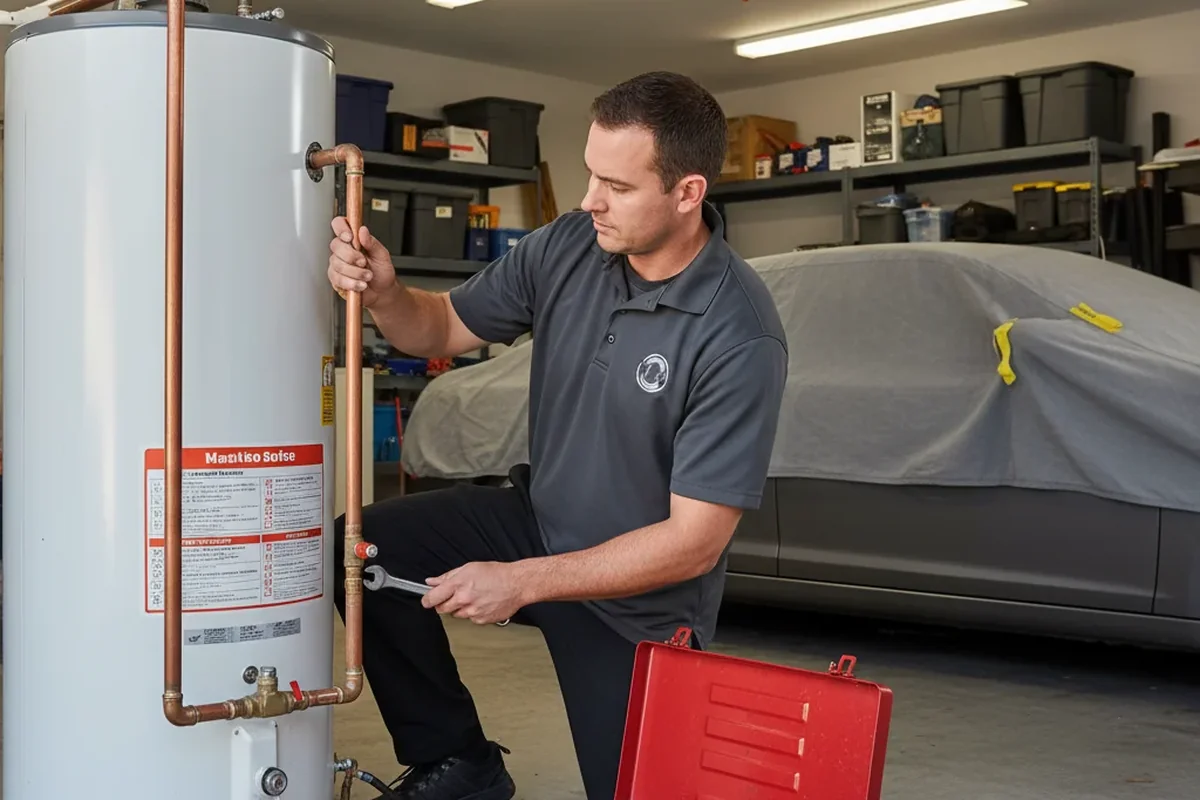
An emergency visit has one priority above all: stop the water. The technician assesses the scene on arrival — where the water is coming from, whether the shutoffs held, and whether gas or electrical hazards are present — then stabilizes the situation. That may mean closing a failed valve, capping a burst fitting, or draining the tank to halt the flooding.
With the situation controlled, diagnosis begins: is the shell itself breached, or is a fitting, valve, or connection the culprit? A breached tank means water heater replacement — pressure vessels cannot be patched. A failed component gets repaired or replaced on the spot when possible. Either way, you leave the visit with the water stopped, the hazard neutralized, and a clear plan — not a guess. You can always back to our homepage for an overview of everything we handle.
Tools and Parts on the Truck
Emergency trucks carry the parts that fail most often: drain valves, TPR valves, thermocouples, gas control components, dielectric unions, flexible supply connectors, pipe fittings, thread sealants, and discharge hose. Pumps and wet-vacs handle standing water, and moisture meters check how far the water traveled into drywall and flooring.
What can be fixed on the spot depends on the diagnosis. Failed valves, fittings, thermostats, and elements are usually same-visit repairs. A ruptured tank, a badly corroded shell, or a unit far past its service life means replacement — the technician will explain exactly why, show you the failure point, and discuss sizing and options for the new unit rather than pushing you blind.
Safety in a Flooded Utility Space
A flooded utility space has three hazards, and water is only the most obvious. Electricity comes first: standing water in contact with an electric heater, its wiring, or nearby outlets can energize the water itself. Power stays off until the area is dry and inspected. Gas comes second: a flooded gas control valve or pilot assembly may malfunction, and any gas smell means evacuating and calling the gas utility.
Scalding is third. Water discharging from a TPR pipe or a burst fitting can be near boiling — keep people and pets clear of the discharge path. Heaters installed in interior closets or attics add a structural concern: dozens of gallons of water in drywall and ceilings get heavy fast. Ventilate gas appliance areas before relighting anything, and never bypass safety controls to "get it working" temporarily.
Why Colton Homes See Burst Tanks
Colton's housing stock explains a lot of our emergency calls. Large sections of the city were built in the 1950s through the 1970s, and many of those homes still run original-era tanks or second-generation replacements that are now well past their prime. Hard Inland Empire water corrodes those tanks from the inside the entire time, and summer garage heat — routinely past 100 degrees — accelerates every chemical reaction involved.
Older Colton installs also tend to lack the protections newer work includes: no drain pan under the tank, no expansion tank on the cold line, original gate-style shutoff valves seized open. When a tank lets go in one of these setups, there is nothing to catch or slow the water. If your heater is over a decade old and has none of these protections, browse the areas we serve and call (833) 713-2101 — an inspection now beats a flood later.