How Anode Rods Protect Tanks Across Chino, CA 91710
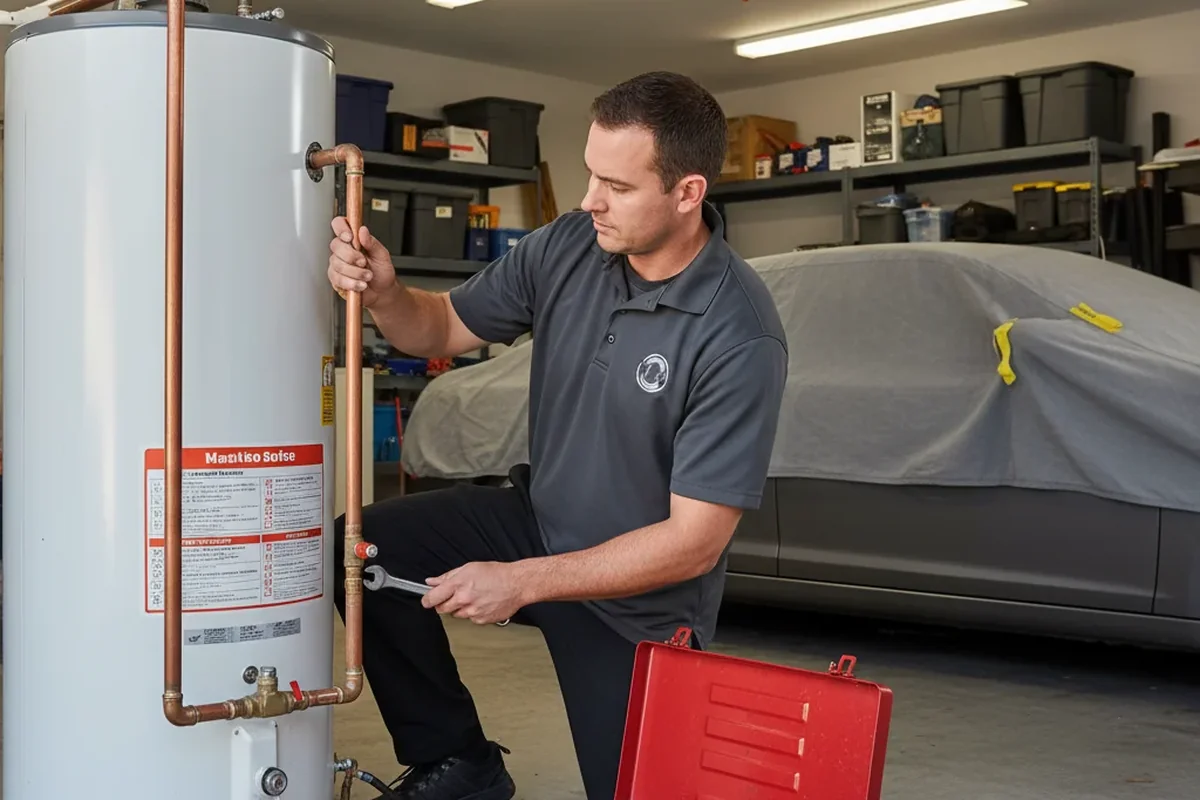
The anode rod threads into the top of the tank — usually under a hex-head plug, sometimes combined with the hot-water outlet nipple — and hangs down into the water. Replacement means shutting off water and power or gas, relieving pressure, extracting the old rod, and threading in the new one with proper sealant. It's a contained, surgical job that takes well under an hour when the port cooperates. When it doesn't — seized threads, corroded nipples, no overhead clearance — the technician adapts with penetrating treatment, careful extraction technique, or a segmented rod that installs in linked sections.
In Chino, that protection math runs on a faster clock: Chino's hard water flows through dairy-era galvanized lines in the older core, shedding rust into tanks. The practical consequence is a shorter inspection interval — the three-year first check isn't conservative here, it's the schedule the water demands, and rods that look half-spent at year four are normal, not defective.
When Chino Homeowners Need a New Anode Rod
Age is the most reliable indicator, even without symptoms: if the heater is over five years old and the rod has never been inspected, assume it's significantly depleted — in Chino's water, possibly gone. Other signs include hot water that smells metallic, a tank that runs out of hot water faster than it used to (scale plus corrosion narrowing effective capacity), and visible corrosion on the hex-head plug or nipples at the tank top. A technician can also read the water heater's history: heavy scale, a previously replaced TPR valve, and discolored water together paint a clear picture of a tank that's been fighting unprotected.
Reading those symptoms takes local context: 1950s-70s ranch tracts around old town with galvanized supply lines, plus newer master-planned areas to the east. The era of the plumbing shapes what the technician finds at the tank top — seized anode ports, corroded nipples, failed dielectric unions — and those findings color the whole diagnosis, because a rod can't be assessed independently of the connections around it.
What Happens During an Anode Rod Visit in Chino
Overhead clearance is the logistical make-or-break on anode jobs. A standard rigid rod is over three feet long and has to come straight up out of the tank top — which means the installation needs roughly four feet of clear space above the heater. In tight closets and low utility nooks, that clearance doesn't exist, and the answer is a segmented or flexible rod: linked sections that feed in one at a time and articulate inside the tank. They cost a bit more and take a bit longer to install, but they protect just as well — and they're the difference between a completed job and a callback in Chino's tighter installations.
Then there's the physical reality of the installation: 1950s-70s ranch tracts around old town with galvanized supply lines, plus newer master-planned areas to the east. Anode replacement lives or dies on overhead clearance — the rod is over three feet long — and where Chino homes box the heater into a closet or low nook, the technician plans for a segmented rod from the start rather than discovering the problem mid-extraction.
Why 91710 Water Is Tough on Anode Rods
Temperature matters twice for anode life: the water temperature inside the tank and the ambient temperature around it. Chino's long hot season keeps garage and closet installations warm for months, and sustained warmth accelerates every electrochemical process inside the tank. Tanks set hotter than necessary — 140 degrees when 120 would do — burn through rods measurably faster while also scalding risk and energy waste climb. The technician's advice on a 91710 service call usually includes the temperature setting: 120 degrees protects the rod, the tank, the energy bill, and everyone who uses the hot water.
Climate is the rod's silent partner in Chino: 95F+ summers, Santa Ana winds, and occasional winter freezes. Sustained heat accelerates the electrochemical activity the rod exists to absorb, so summer is when marginal rods finally give up — and the months when an unprotected tank corrodes fastest. The inspection schedule that looks cautious on paper is simply honest about what heat plus hard water does to sacrificial metal.
Keeping Your Chino Water Heater Protected
Powered anode rods deserve a mention for Chino homeowners tired of the replacement cycle. Instead of sacrificial metal, a powered rod uses a small electrical current from a wall outlet to provide the same galvanic protection — and it never gets consumed, eliminating both the replacement schedule and the sulfur-smell reaction that plagues magnesium rods in certain water. They cost more upfront and need an outlet near the heater, but for households on aggressive well water or with recurring odor issues, the math often works. Ask the technician whether your installation qualifies.
Put it together and the Chino maintenance picture is clear: Chino's hard water flows through dairy-era galvanized lines in the older core, shedding rust into tanks, and 1950s-70s ranch tracts around old town with galvanized supply lines, plus newer master-planned areas to the east. Annual flushing, rod checks every two to three years starting at year three, temperature at 120 — none of it is optional diligence here, it's the routine the local conditions require. The homeowners whose tanks last fifteen years in the 91710 area aren't lucky; they're maintained.
Whether it's a conventional replacement or an upgrade to powered protection, the starting point is the same: an inspection of what's in the tank now. Call (833) 713-2101 to have a technician serving the 91710 area check your rod and give you a straight answer on the tank's condition.