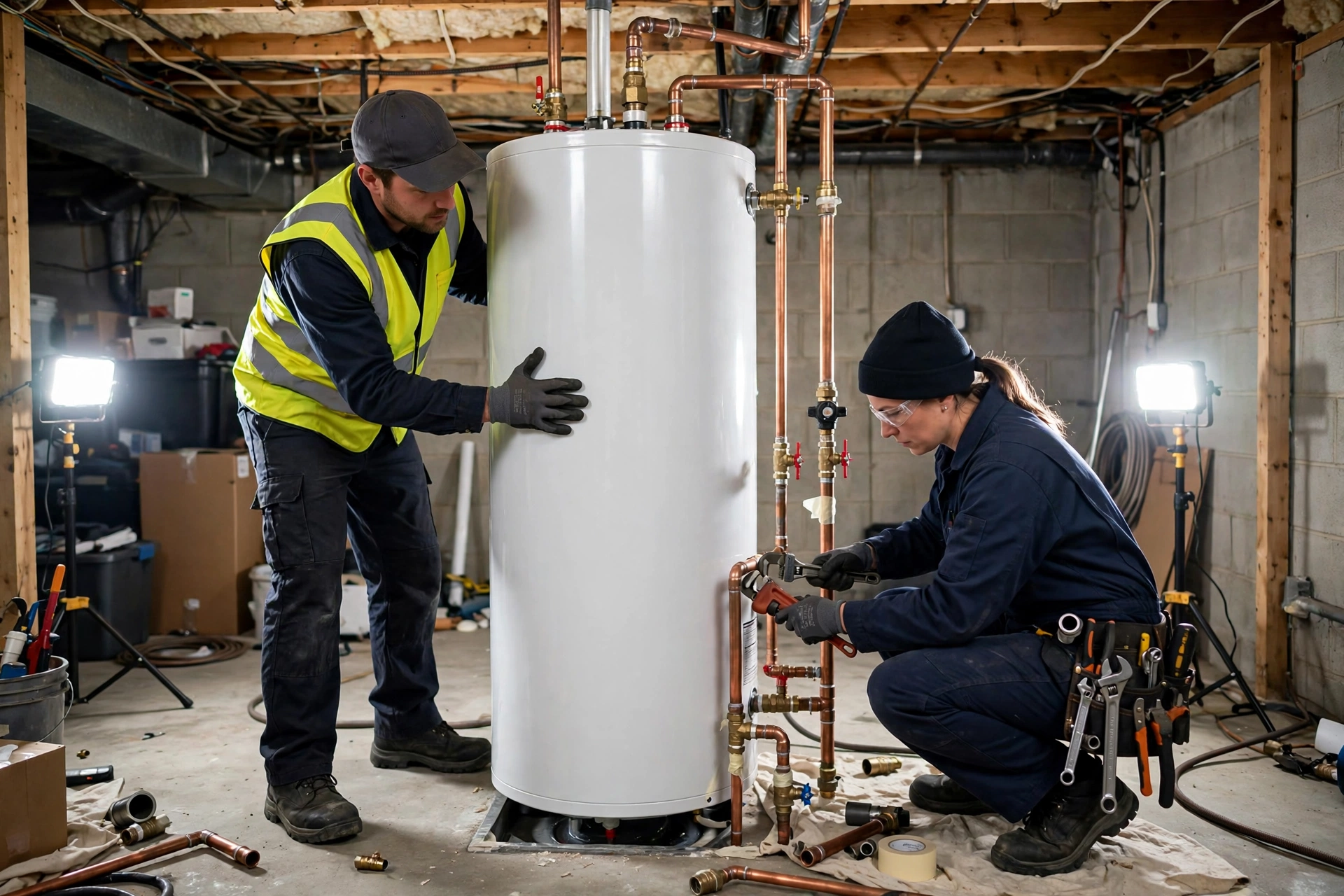
"Can you just fix it?" is the first thing most homeowners ask when we arrive for a leak call, and it's the right question. Sometimes the answer is absolutely yes — a valve, a fitting, an element. Sometimes the honest answer is that a repair buys months while a replacement buys a decade. Here's how to think about it.
Conventional tanks last 8 to 12 years; tankless units 15 to 20. Under 6 years old: repair almost always wins. 6 to 10: it depends on the failure and the tank's condition. Over 10: lean replacement unless the fix is trivial (like a drain valve) and the tank is otherwise pristine. Check the serial number — most manufacturers encode the date in the first four digits.
If a repair costs more than half of replacement and the unit is past mid-life, replacement usually wins on economics alone — before factoring in the efficiency gains of a new unit and the value of a fresh warranty. A 9-year-old tank needing a $600 gas valve is the textbook case for replacing.
New heaters are meaningfully more efficient than 10-year-old ones — better insulation, smarter controls, and heat-pump options that slash operating cost. Also, codes change: a replacement may need expansion tank, updated venting, or pan/drain additions your old install predates. A good quote itemizes these rather than surprising you.
The worst time to choose a heater is during an emergency flood at midnight. If your unit is 9+ years old, start planning now: get a quote, understand your options (tank vs. tankless vs. heat pump), and replace proactively. Emergency replacements cost more and offer fewer choices.
Find the serial number on the manufacturer's label (usually on the tank's side). Most manufacturers encode the manufacture date in the first few characters. For example, Rheem uses MMYY format, AO Smith uses YYWW (year/week), and Bradford White uses a letter-based year code. A quick web search for "[brand] serial number date code" will tell you how to decode yours.
If the label is missing or illegible, check for an installation date written on the tank or nearby piping — many installers mark this. Your home inspection report (if you bought the house) may also note the water heater's age. As a last resort, the building permit for installation might be on file with your local municipality.
If your water heater is 8-12 years old but still functioning, aggressive maintenance can squeeze out extra years. Replace the anode rod immediately if it hasn't been done. Flush the tank thoroughly to remove sediment. Test the T&P valve and replace if faulty. Insulate the tank and pipes to reduce standby losses and thermal stress.
However, be realistic: maintenance can't reverse internal tank corrosion. If your unit is past 12 years, start budgeting for replacement even if it's currently working. The goal is to replace on your schedule, not the water heater's.
When replacement time comes, consider whether to stick with the same type or upgrade. Tankless units offer endless hot water and longer lifespans but cost more upfront and may require gas line or electrical upgrades. Heat pump water heaters are extremely efficient but need adequate space and ambient temperature. High-efficiency tank models offer a balance of familiar operation and lower running costs.
Get multiple quotes and ask about warranty terms — longer tank warranties (9-12 years) indicate better build quality. Consider your household's hot water needs, energy costs, and available space when deciding. A professional assessment can help you choose the right size and type.
Any water heater problem involving leaks, unusual sounds, or inconsistent hot water warrants prompt attention. Small issues become major failures if ignored. When in doubt, have a professional assess the situation.
Basic maintenance like flushing and visual inspections are DIY-friendly. Repairs involving gas, 240-volt electricity, or the tank itself should be left to licensed professionals for safety and code compliance.
Annual professional maintenance, regular DIY inspections, prompt attention to minor issues, and following manufacturer recommendations are the best prevention. Keep records of all maintenance performed.
One call is all it takes. Talk to a real water heater leak specialist serving Colton and the Inland Empire — no pressure, no obligation.
Call (833) 713-2101 Water Heater Leak Repair Specialists