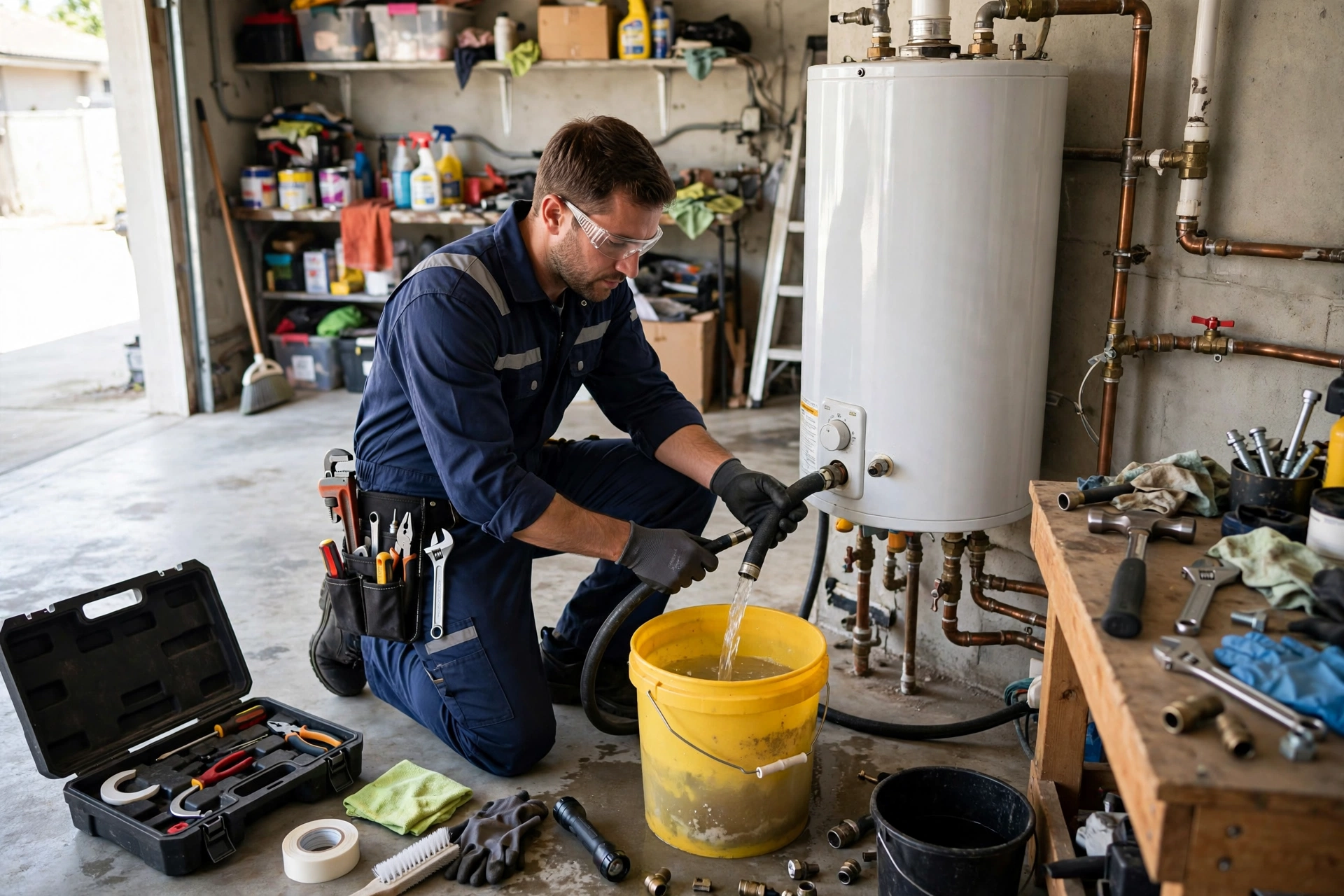
Inside every tank water heater is a metal rod that is literally designed to destroy itself so your tank survives. It's called the anode rod, and it's the single most overlooked maintenance item in residential plumbing. Replace it on schedule, and a 10-year tank can last 15 or 20 years. Ignore it, and you're buying a new heater years early — plus risking the exact kind of tank-failure leak we get called about at 2 AM.
Water is corrosive to steel. Your tank is steel with a glass lining, but that lining always has microscopic imperfections. The anode rod — usually magnesium or aluminum — is more reactive than steel, so corrosive elements in the water attack the rod first. This is called sacrificial protection, and it works beautifully until the rod is consumed.
A standard rod lasts 3 to 5 years depending on water chemistry. Softened water, high chlorides, and hot settings all eat rods faster. Once the rod is gone, the tank itself becomes the sacrificial metal, and that's when pinhole leaks and seam failures begin.
You can't see the rod without pulling it, but the symptoms of a depleted rod are recognizable:
Magnesium rods protect best but get consumed fastest and can feed the bacteria that cause sulfur smells. Aluminum rods last longer and are cheaper but protect slightly less aggressively. Powered (impressed-current) rods use a small electrical current instead of sacrificial metal — they never need replacement and they eliminate sulfur-smell issues, but they cost more upfront and need an outlet nearby.
For most homeowners, we recommend checking what you have at year 3 and replacing with the same type unless you're fighting odor issues, in which case a powered rod or aluminum-zinc alloy is worth discussing.
A technician shuts off power and water, relieves pressure, and unscrews the rod from the top of the tank with a breaker bar — they're often seized in place after years. The new rod goes in with thread sealant, and the system is refilled and checked. It's typically a sub-one-hour job with no disruption beyond a brief hot-water pause.
One caution: on very old heaters (10+ years) with a never-replaced rod, disturbing the rod can occasionally disturb sediment holding a weak spot together. A good tech will assess tank condition first and tell you honestly if replacement still makes sense or if you're better off planning a new unit.
Check the rod at year 3, then every 2 years after. In aggressive water conditions, check annually. Pair it with a yearly tank flush and T&P valve test, and you've covered the three maintenance tasks that prevent the vast majority of premature tank failures.
You don't need to be a plumber to check your anode rod's condition. First, turn off the water heater — for electric models, switch off the breaker; for gas, turn the gas control to "pilot." Shut off the cold water supply valve at the top of the tank. Relieve pressure by opening a hot water faucet and briefly lifting the T&P valve lever.
The anode rod is accessed through a hex-head fitting on top of the tank, often under a plastic cap. You'll need a 1-1/16 inch socket and a breaker bar. Once loosened, pull the rod straight up. If your ceiling is low, a flexible segmented replacement rod bends for installation in tight spaces.
Examine the rod: a healthy rod retains substantial diameter. A depleted rod will be down to a thin wire core, possibly with sections completely eaten away. If more than half the sacrificial material is gone, replacement is overdue.
Standard magnesium rods offer the best protection for most water conditions. Aluminum-zinc rods are preferred where water has a sulfur or rotten-egg smell, as they produce less of the reaction that causes the odor. Powered anode rods use a small electrical current instead of sacrificial metal — they never need replacement but cost more upfront.
Length matters: rods come in various lengths to match tank heights. A rod that's too short leaves the bottom of the tank unprotected. Measure your old rod or check your water heater's specifications before buying.
Anode rod replacement is preventive maintenance, not a repair for an already-leaking tank. If your tank is leaking from the shell itself — not from a fitting or valve — the steel has already been compromised. In that case, full water heater replacement is the only reliable solution. Installing a fresh anode rod in your new unit from day one is the best way to maximize its lifespan.
One call is all it takes. Talk to a real water heater leak specialist serving Colton and the Inland Empire — no pressure, no obligation.
Call (833) 713-2101 Water Heater Leak Repair Specialists